Start with the load
Thickness is a structural decision before it is an aesthetic one. The question is what is going to be on top of the stone and what is underneath it.
| Application | Thickness | Notes |
|---|---|---|
| Wall cladding, adhered | 18–20 mm | Keep the panel weight down; check the adhesive spec |
| Interior flooring, domestic | 20–25 mm | 25 mm if the slab is over 600 mm on any side |
| Interior flooring, commercial | 25–30 mm | Trolleys and heavy footfall |
| Staircase treads | 25–40 mm | Full-piece treads, no joints in the going |
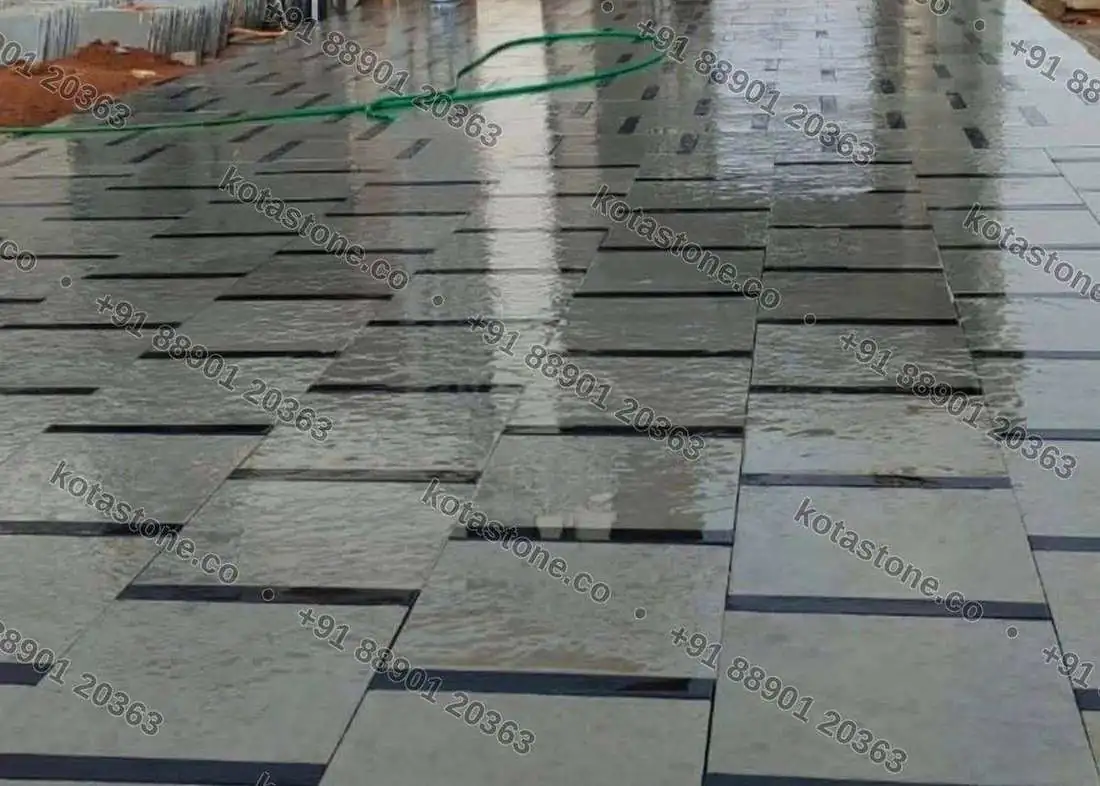
| Exterior paving, pedestrian | 30–40 mm | Bedded on mortar over a stable sub-base |
| Courtyards and plazas | 40–50 mm | Allow for thermal movement joints |
| Driveways and parking | 50–60 mm | Or 60 mm cobbles on compacted base |
The single most common error is using 20 mm material outdoors because it looked fine in the showroom. A 610×610 mm slab at 20 mm laid over an imperfect sub-base will crack the first time a vehicle crosses it.
Slab size and the joint question
Larger slabs mean fewer joints, which usually looks better and is quicker to lay. They also demand a flatter substrate, thicker material, and more careful handling — and they crack more readily if the bed is uneven.
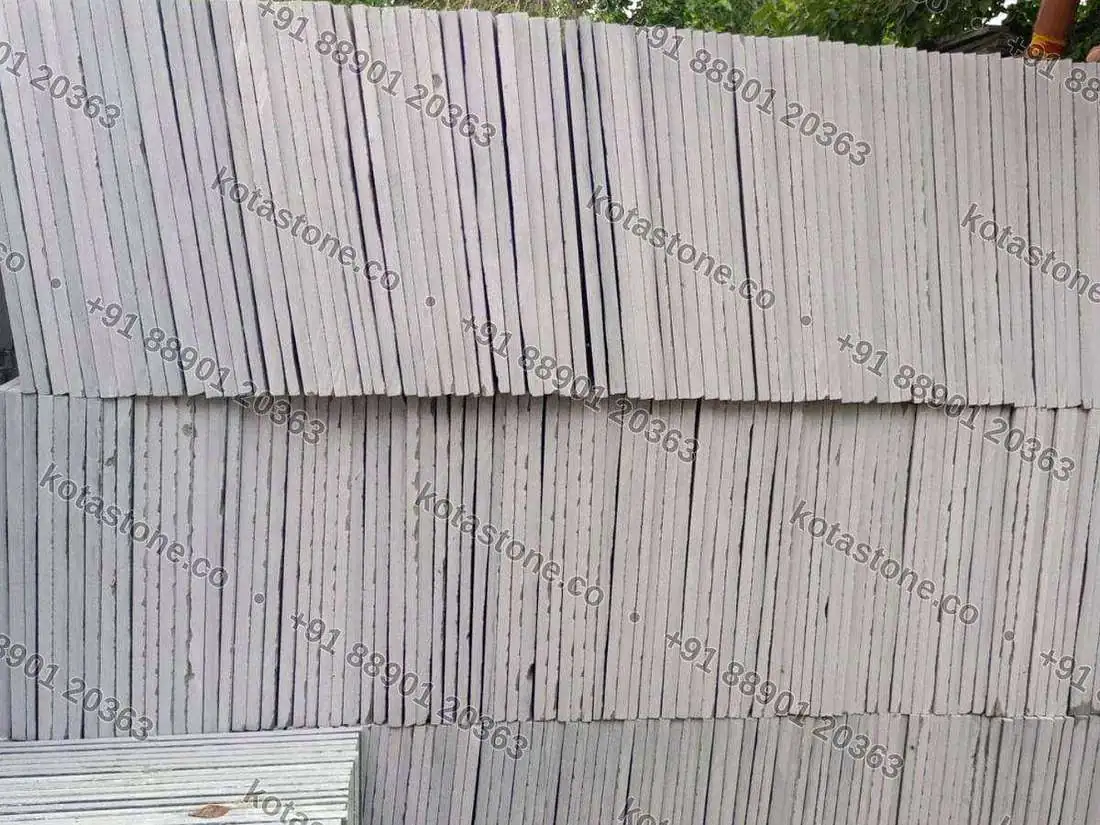
- 305×305 mm — bathrooms, small rooms, curved layouts, cladding.
- 610×305 mm — corridors, borders, treads, brick-bond layouts.
- 610×610 mm — the default. Good balance of appearance, cost and handling.
- 914×610 and 1220×610 mm — large interior floors and lobbies. Specify 30 mm minimum and check that the site can actually move the pieces.
- Random slabs — the most economical option per square foot, since it uses the bed as it comes. Ideal for paving and crazy work.
Calibrated or uncalibrated?
Uncalibrated stone comes with natural thickness variation across the batch — a nominal 25 mm slab might range 22–28 mm. The mason absorbs that variation in the mortar bed, which means a thicker bed, more material and a slower, more skilled lay.
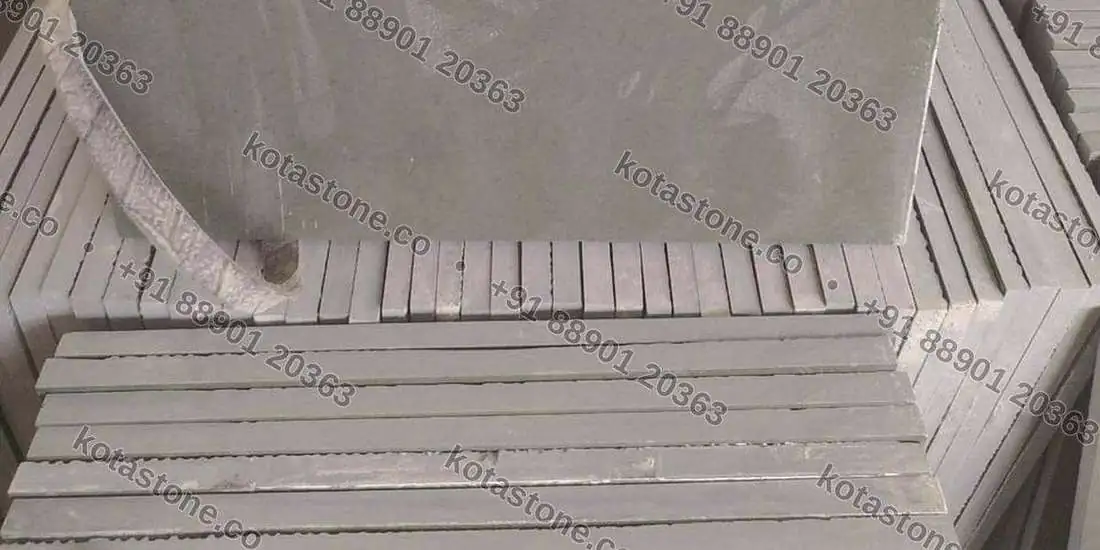
Calibrated stone is machine-ground to a consistent thickness, typically ±1 mm. It costs more per square foot but it lays faster, uses less adhesive, and is essentially mandatory if you are laying on a thin-bed adhesive system rather than a traditional mortar bed.
When to pay for calibration
Calibrate if you are using thin-bed adhesive, laying large-format slabs, working to a tight floor level, or paying skilled labour by the day. Skip it for random paving, rustic exteriors, cobbles, or any job where a traditional thick mortar bed is going down anyway.
Edges and tolerances
Specify the edge on your drawing. Machine-cut edges give tight, near-butt joints. Hand-dressed or chiselled edges give a deliberately irregular line that suits rustic and heritage work. For treads, name the nosing profile — square, pencil-round, half-bullnose or full bullnose — because it changes the cutting.
Realistic tolerances for cut-to-size work: ±1 mm on length and width, ±1 mm on calibrated thickness, and squareness within 1 mm across a 600 mm diagonal. If your detail needs tighter than that, tell us at quotation stage rather than at delivery.
Quantities and wastage
Order 7–10% over your measured area for a straightforward layout, and 12–15% for diagonal patterns, curved edges or heavy cutting. Order the whole quantity at once. Stone from a different bed or a different month will not match, and a shortfall of 200 sq ft at the end of a job is a genuinely expensive problem.
Published 24 February 2026 by Agrawal Stone Suppliers, Ramganjmandi, Kota. Every stone we write about passes through our own yard — if something here does not match what you are seeing on site, call us and we will talk it through.