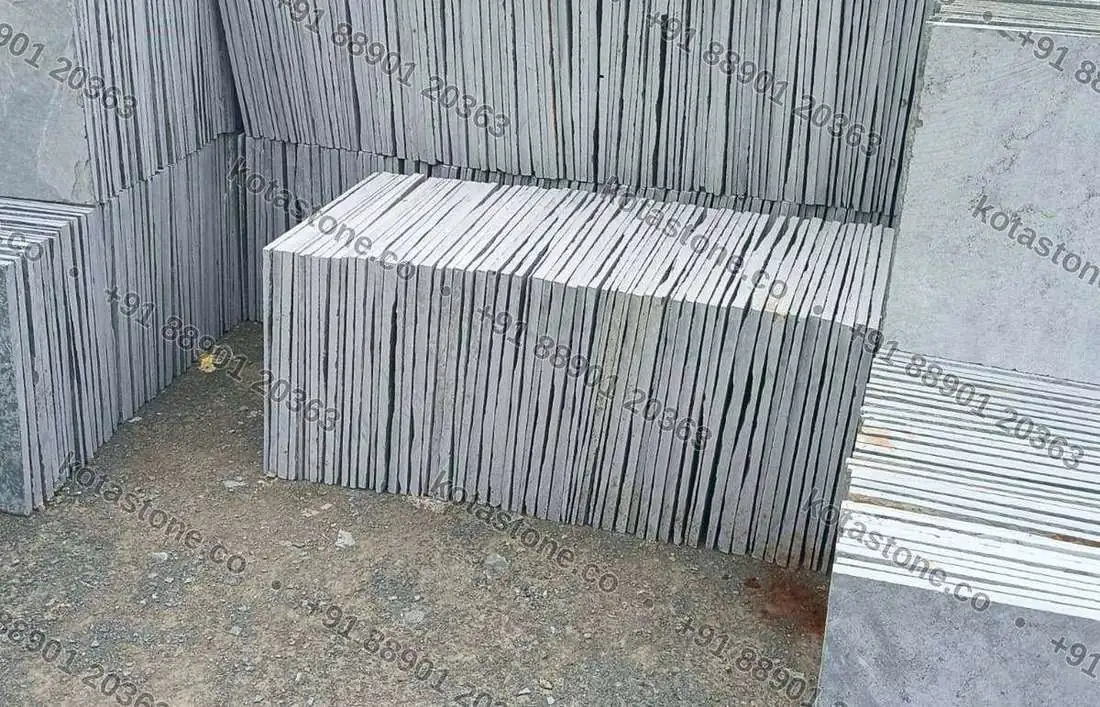
Both sides of it
Kota Stone: Advantages and Disadvantages
We sell this stone, so treat what follows accordingly — but we would rather lose an order than have a floor fail. Kota stone is outstanding at some things and genuinely poor at others, and most complaints we hear come from it being specified for a job it was never right for.
The case for it
Advantages
Why Kota stone has held its place as India’s default hard floor for a century.
The case against it
Disadvantages
The honest list. Every one of these is manageable if you know about it before you specify.
Verdict
So should you use it?
- Yes for internal floors of houses, offices, showrooms, schools, hospitals and temples — in honed, leather or in-situ polished finish, 20–25 mm, calibrated if the floor is large.
- Yes for courtyards, verandas, paths and parking in natural, sawn or rock-faced finish at 25–40 mm.
- No for kitchen and bathroom counters. Granite is the right stone there.
- No in mirror polish anywhere that gets wet.
- Think twice on coastal sites and in freeze-thaw hill climates — ask us and we will point you at basalt or a dense green grade instead.
Questions
Kota Stone: Advantages and Disadvantages
What are the main disadvantages of Kota stone?
It etches when acid touches it, because it is a limestone; polished finishes get slippery when wet; colour varies between quarry lots; and it is heavy, which adds freight cost and structural load. None of these are problems if the stone is specified for the right job.
Is Kota stone better than vitrified tiles?
For heavy traffic and for lifespan, clearly yes — and it can be re-ground rather than replaced. For a perfectly uniform look, for acid resistance, and for laying speed, a vitrified tile wins. We set the comparison out fully in our buying guide.
Does Kota stone crack easily?
Not the stone itself — cracking is almost always the bed, not the material. A hollow or uneven mortar bed leaves the piece unsupported and it fails at the void. Laid on a properly filled bed at the right thickness, Kota is extremely tough.
Does Kota stone turn yellow?
Grey and green Kota do not yellow. What people call yellowing is usually either oil absorbed into an unsealed surface, or a cheap wax polish breaking down. Both are avoidable — seal it, and do not wax it.
Is Kota stone good for a bathroom?
Yes, in a honed, leather or natural finish — it is used in bathrooms across India. Never in mirror polish, and keep acidic cleaners away from it.
Related
Where to go next
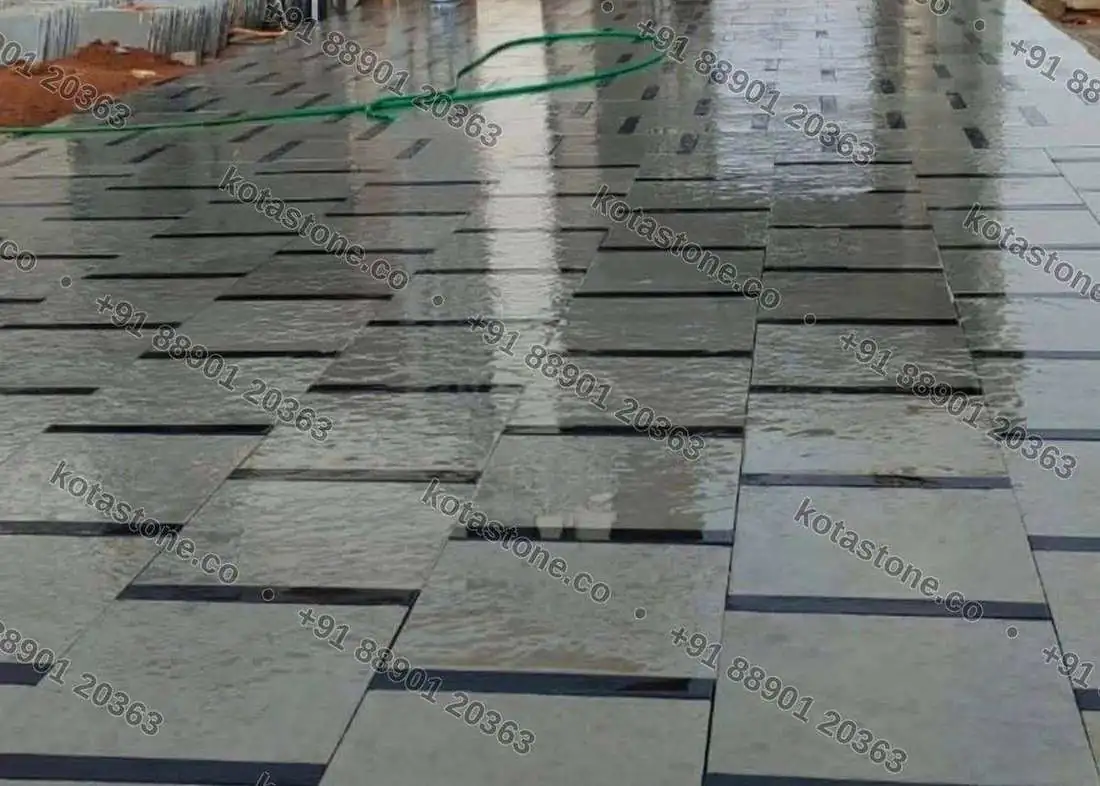
Kota stone flooring
Thickness, finish and specification for floors.
See the range
Kota vs marble & granite
How it really compares on cost, wear and upkeep.
See the range
Care & maintenance
Sealing, cleaning and fixing etch marks.
See the rangeFresh, medium & premium
How we sort it, and what each grade is for.
See the range
Finishes
Which surface belongs in which room.
See the rangeRates & price
What moves the number, and how to ask for it.
See the rangeNext step
Ask for today’s rate.
Send the size, thickness, finish and quantity with your pin code. You get an ex-yard rate, a delivered rate, and an honest lead time.