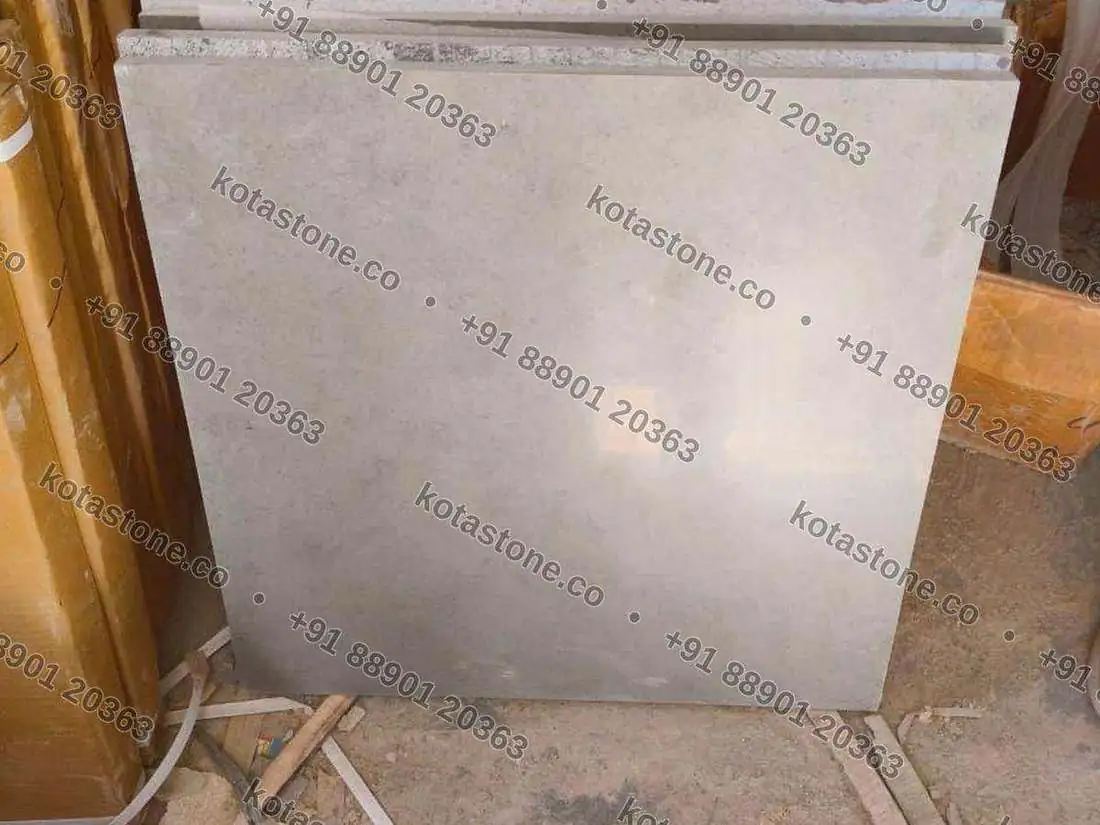
Surface work
Kota Stone Polishing
Polishing is where most of the added value — and most of the added cost — in a Kota floor sits. It is also where most of the confusion is, because the same word covers a factory process and a site process that produce quite different results at quite different prices.
The finishes
What each level of polish means
In order of how much machine time goes into the surface, and therefore of cost.
Two different jobs
Factory polish against in-situ polish
They are not interchangeable, and knowing the difference will save you money on either route.
Choosing
Which polish for which floor
- Living rooms, bedrooms, offices: honed, lapatro or in-situ polished. Comfortable, low glare, low maintenance.
- Lobbies, showrooms, reception areas: mirror or diamond polish, where the shine earns its keep and the floor stays dry.
- Bathrooms, kitchens, utility areas: honed or leather. Never mirror.
- Verandas, courtyards, paths, driveways: natural, sawn or rock faced. External polish does not survive UV and rain, and it is unsafe wet.
- Temple and institutional floors: in-situ ground and polished, 25–32 mm, so it can be renewed again in twenty years.
Questions
Kota Stone Polishing
What is the difference between mirror polish and diamond polish Kota stone?
Both are reflective. A conventional mirror polish is built up with polishing heads; a diamond polish uses diamond abrasives and produces a harder, deeper gloss that holds up better under traffic. Diamond polish costs more and lasts longer.
Can Kota stone be polished after laying?
Yes — and traditionally that is exactly how it is done. The floor is laid in natural or sawn stone, then ground flat and polished as one continuous surface. It removes lippage completely and is often cheaper overall on large floors.
How do I restore a dull or scratched Kota floor?
Re-grind and re-polish it in place. Kota takes this very well and an old floor can be brought back to a better surface than it started with. Etch marks from acid also come out this way, which is why they are annoying rather than fatal.
Does polished Kota stone need calibration?
If it is factory polished and you want to lay it thin-bed or with tight joints, yes. Uncalibrated stone varies in thickness across the lot and the mason has to pack every piece to keep the surface flush, which costs more in labour than calibration costs in material.
Is polished Kota stone slippery?
A full mirror polish is, when wet. That is a specification decision, not a fault in the stone — use honed, leather or natural anywhere water reaches, and keep the mirror finish for dry internal areas.
Related
Where to go next

All twelve finishes
Every surface we run, with where it belongs.
See the range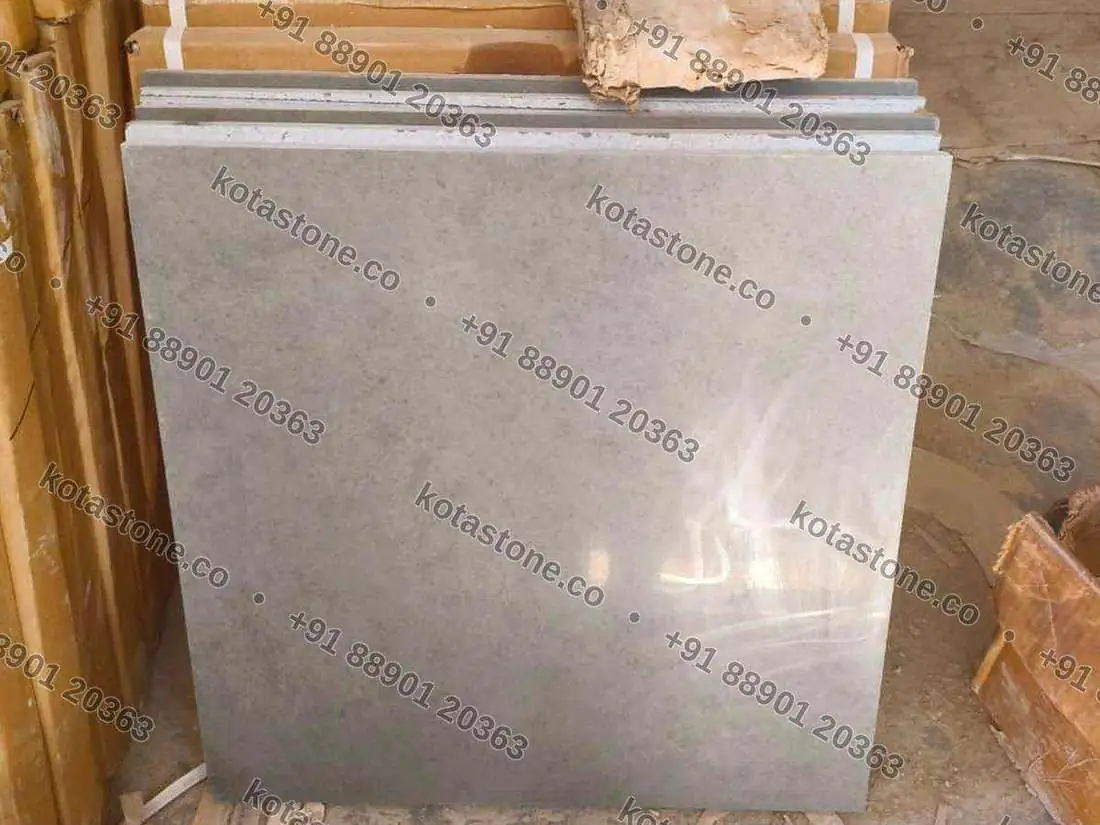
High polish 22″ × 22″
Our most-asked-for polished size, calibrated or not.
See the range
Mandana mirror polish
The same polishing line, on red sandstone.
See the range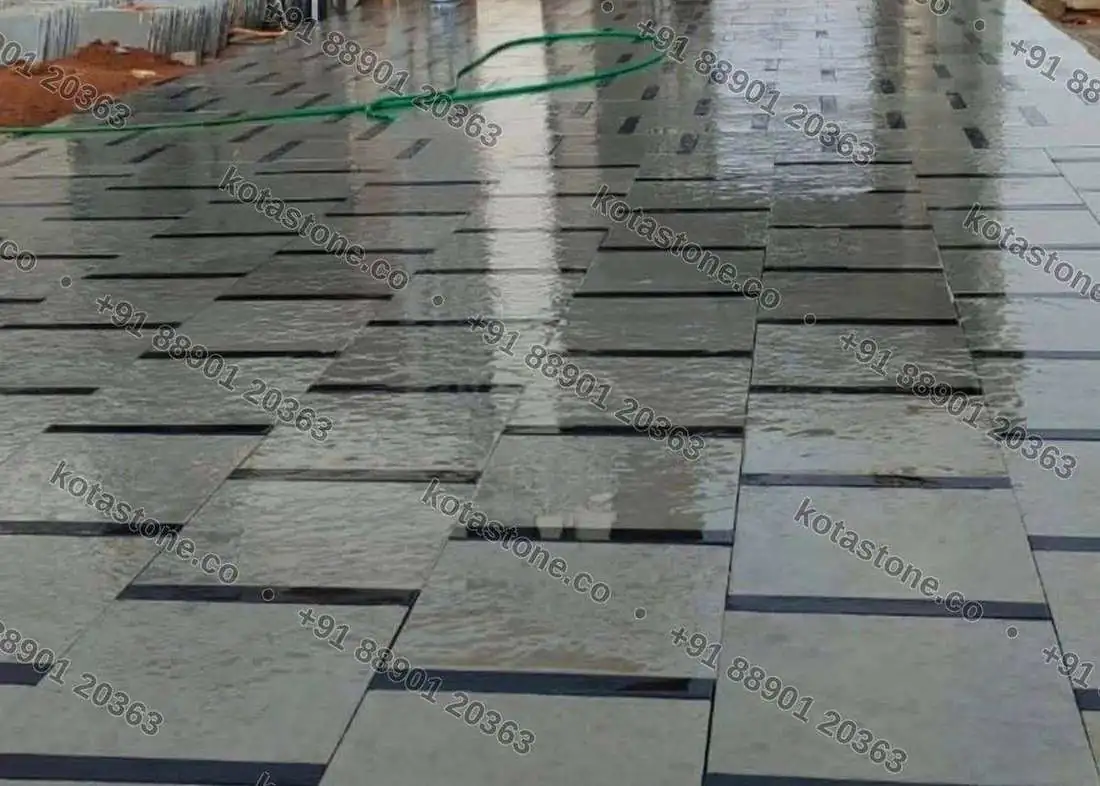
Kota stone flooring
Thickness and finish by application.
See the range
Choosing a finish
A longer walk through the decision.
See the range
What polishing adds
Where polish sits in the total cost of a floor.
See the rangeNext step
Ask for today’s rate.
Send the size, thickness, finish and quantity with your pin code. You get an ex-yard rate, a delivered rate, and an honest lead time.