Machine-polished on the diamond line
What diamond polishing actually does
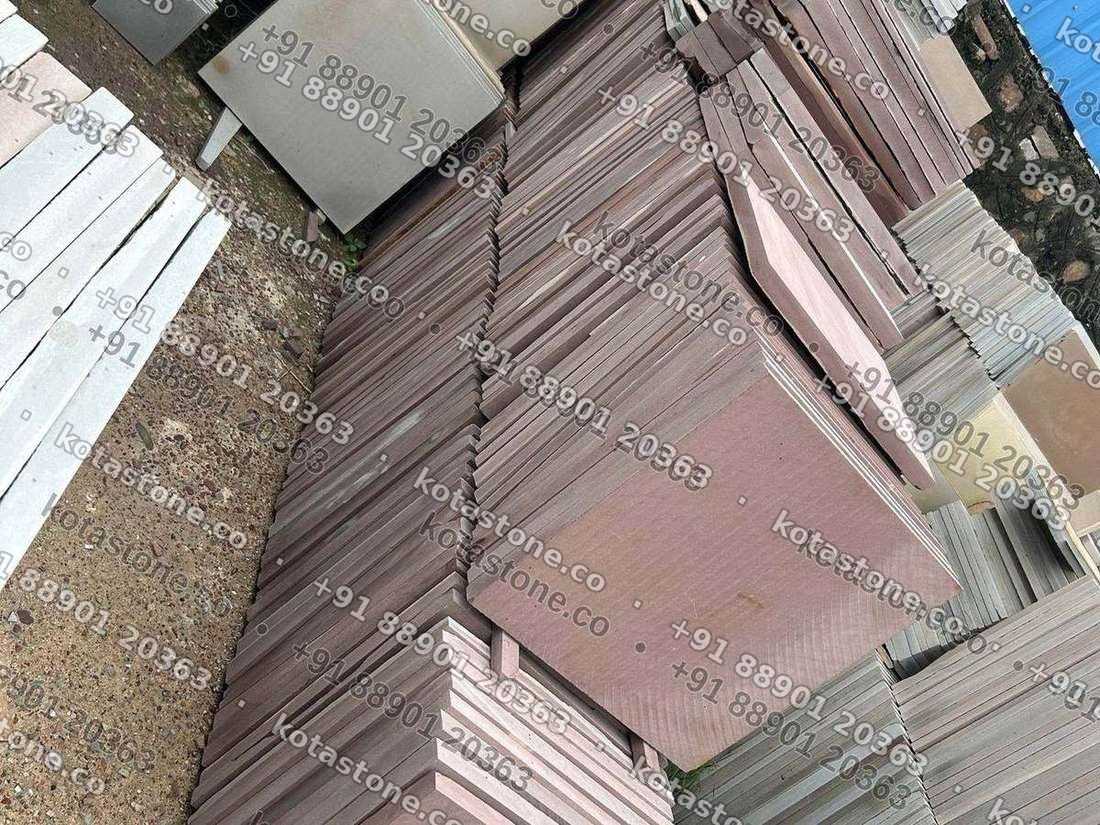
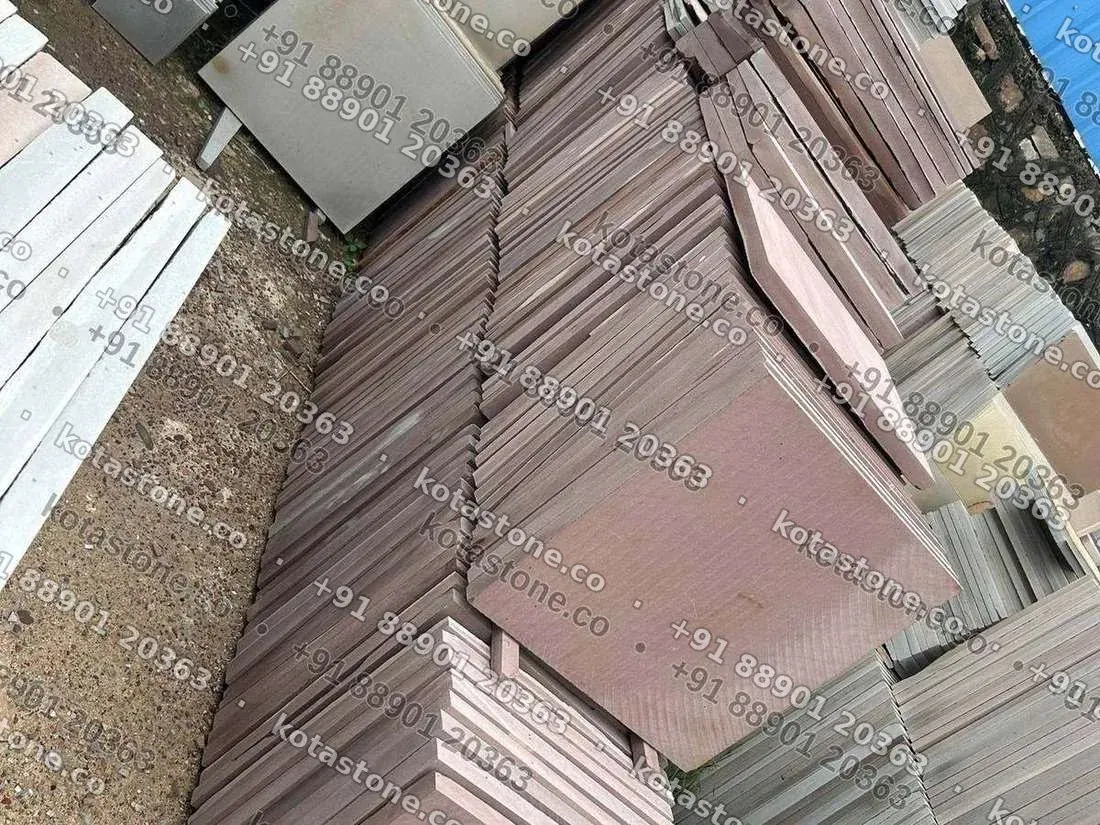
Diamond polishing is a machine process, not a hand one. The slab passes under a line of rotating heads carrying progressively finer diamond abrasive segments, each pass taking the surface down a grade until the face is dead flat and evenly reflective. What you are looking at on this page is exactly that surface, photographed in our own yard — no rendering, no sample board.
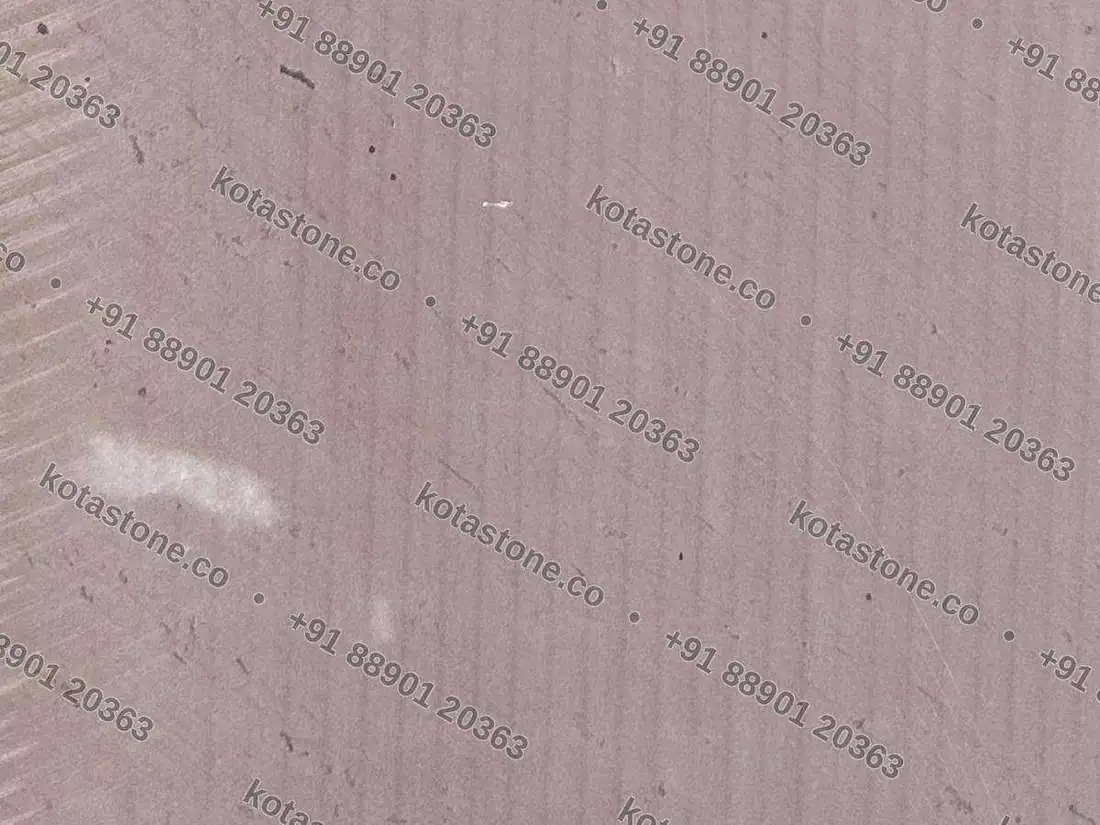
The characteristic of the finish is the tooling. Look across a diamond-polished slab in raking light and you will see fine parallel lines from the head travel, and on wider slabs the faint arc of the head path. That is not a defect. It is the honest signature of the process, and specifiers who want it want it precisely because it reads as worked stone rather than as a printed tile.
Because Mandana is silica-based rather than calcareous, it takes this treatment differently to a limestone. The polish does not close the surface into a mirror the way polished Kota does; it lands at a soft satin that keeps a little grip and hides marks far better than a full gloss. In practice that makes it a much more forgiving floor than people expect from the word ‘polished’.
We hold it in two commercial forms — random slabs straight off the bed run, and 22″ × 22″ cut squares. The random slabs are the economical option and the one to specify when the layout can absorb varied lengths. The 22″ square is the format most clients ask for by name.
Also available in
Diamond polishedHoned finishLeather / brushedSawnNatural rivenGrooved / anti-skid
Photographed at our yard at Amarpura. The faint parallel lines are the abrasive head travel — the signature of the diamond line.
At a glance
StoneMandana sandstone
ColourSoft rose to dusty pink-mauve
FinishMachine diamond polish
FormsRandom slabs and 22″ × 22″
Thickness15 – 60 mm
Cut to sizeYes, to drawing